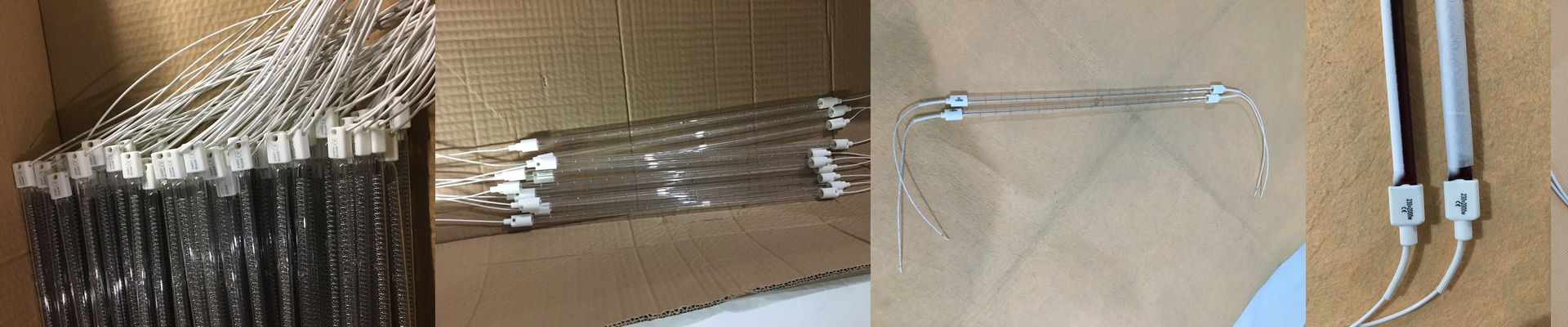

Getting the Heat Right for Your Santex Systems
When you’re running a Santex machine, it’s not just about cranking up the heat. It’s a delicate balance. You want those fibers to relax and settle without accidentally scorching the fabric. Most shops just see IR lamps as things you swap out when they blow. We see them differently. To us, those lamps are the biggest lever you have to control your energy bill and your quality.
The actual physics of it
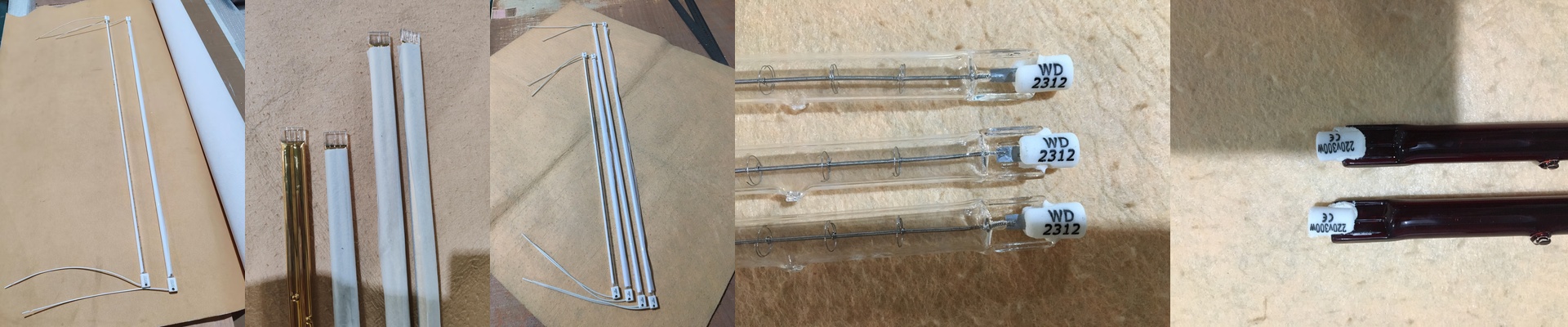
Here’s the thing: standard IR lamps tend to overshoot. They get too hot, too fast. That’s how you end up with uneven shrinkage or, worse, ruined fabric. We spend our time picking lamps that balance wattage and voltage just right to keep the temperature in a tight window. Because the output is so dense, you can actually shorten your heating zone. That saves you a decent amount of floor space. But the real secret is the wavelength. If the lamp isn’t hitting the specific absorption band of your textile, the heat just sits on the surface. That leads to that annoying “surface-burn” you see with cheap replacements. We make sure the heat actually penetrates the core of the fabric.
The nuts and bolts
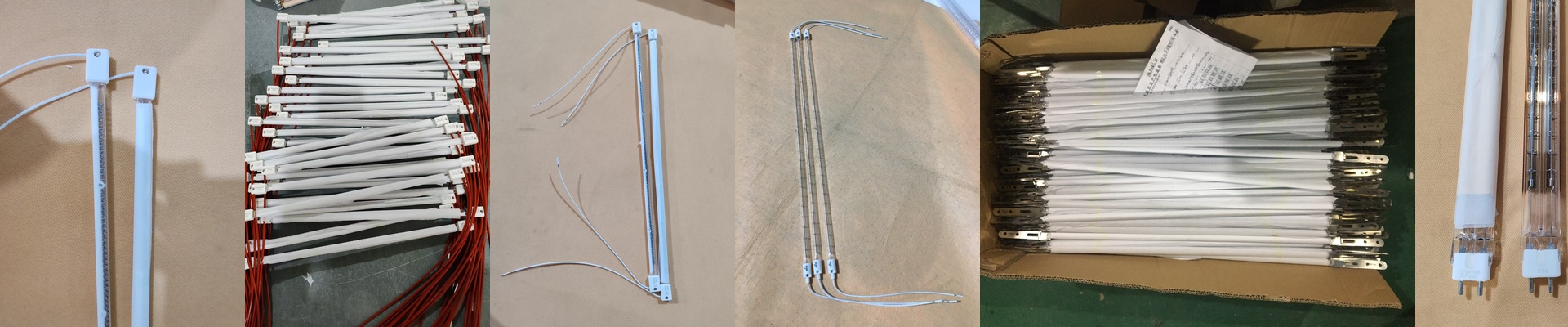
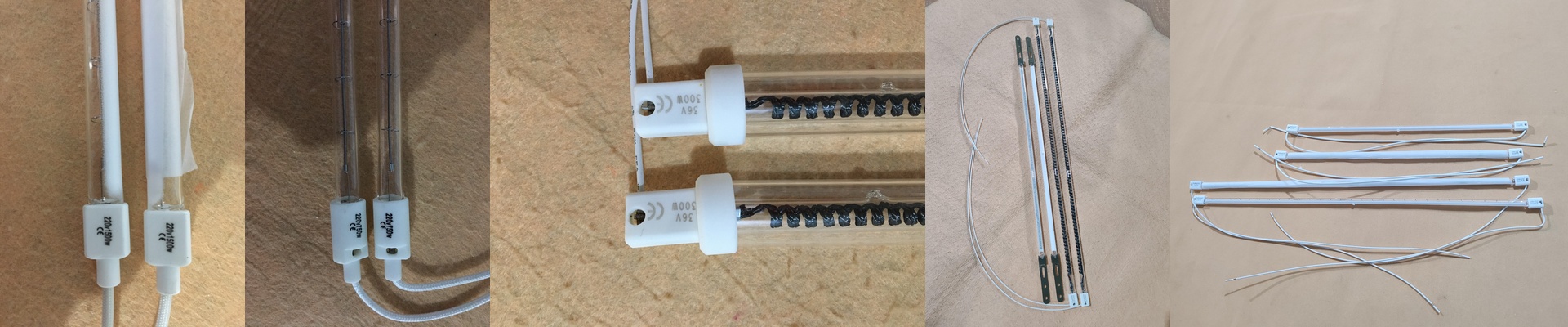
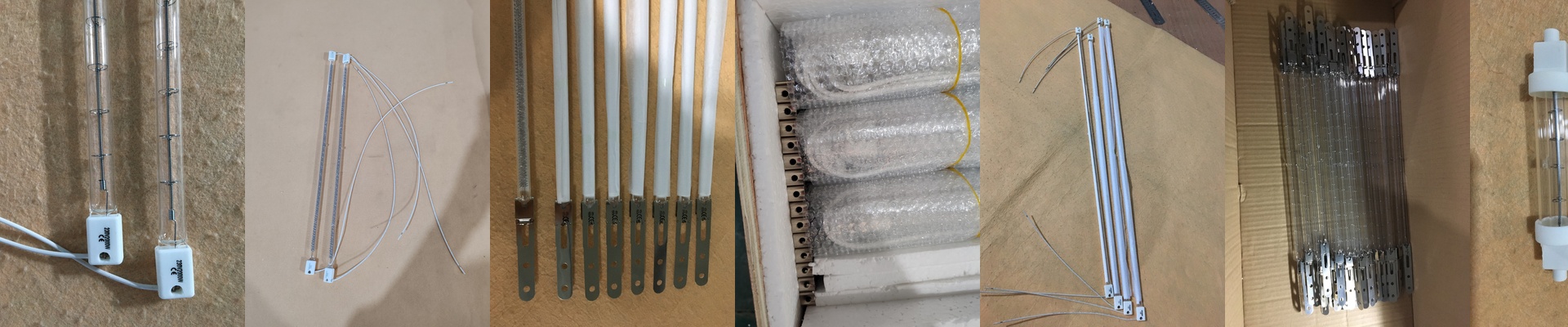
We stick with high-purity quartz and specific halogen cycles. Why? Because it stops the filament from evaporating too quickly. It means your output stays steady for thousands of hours instead of dipping. And don’t overlook the connectors. Whether you’re using a standard R7s or a heavy-duty pin, a loose fit is a nightmare. It causes arcing, kills the lamp early, and adds unnecessary downtime when you’re trying to do a quick swap.
The trade-off: Power vs. Cooling
It’s tempting to just jump to a higher wattage lamp to push more product through the line. But there’s a catch. More heat density puts a massive strain on your cooling fans and the housing. If you push the wattage too high without fixing your airflow, you’ll literally bake your reflectors. You’ll end up killing the lamp’s lifespan just to get a bit more speed. It’s all about balance. You have to weigh how much IR output you need against what your system can actually breathe out.