Stop Wasting Your Heat: Why Reflector Shape Actually Matters
When you’re processing textiles, the lamp is only half the battle. The real secret is the reflector. Without a good one, your energy isn’t hitting the fabric—it’s just heating up the machine frame and wasting your money. We spend a lot of time obsessing over the geometry between the infrared source and the fabric because that’s where you stop the “energy bleed.”
Getting the Light Path Right
Think about a standard cylindrical lamp. It throws heat in every direction—a full 360 degrees. If you don’t have a reflector, you’re basically throwing away half your power before it even reaches the cloth. That’s why we use parabolic or elliptical shapes. They catch those stray photons and push them back where they belong. By tweaking the focal length, we can create a tight “hot zone.” You get way more heat on the fabric without having to crank up the power draw on your lamps. But here’s the catch:precision is everything. If the lamp shifts by just 2mm in its seat, your focal point vanishes. Suddenly, you’ve got cold spots in some areas and scorched fabric in others. It’s a nightmare. That’s why we keep our housing tolerances incredibly tight. It keeps the light path locked in.
Gold, Aluminum, and the “Burn” Factor
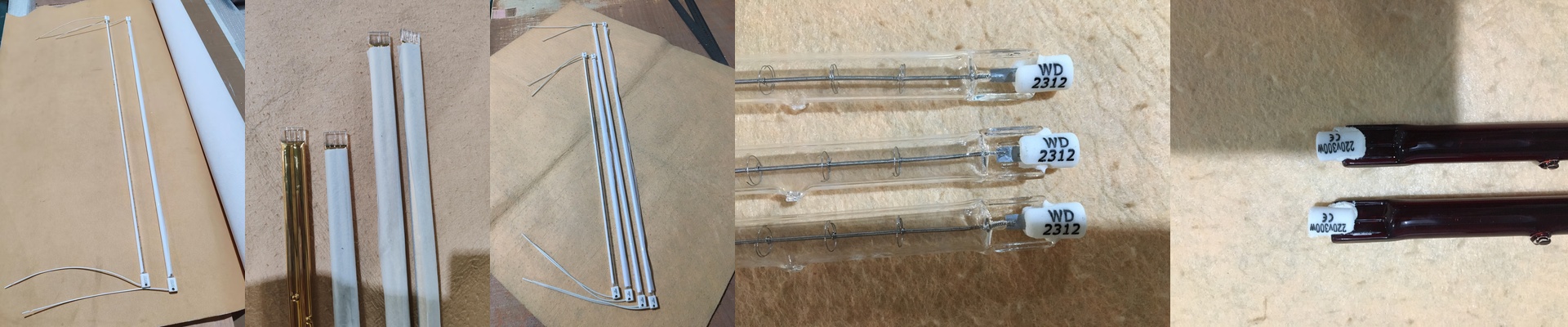
We usually go with either gold-coated or polished aluminum reflectors. Gold is the gold standard for a reason—it’s incredible at reflecting infrared, especially the long-wave heat. Aluminum is cheaper and gets the job done, but it tends to wear down faster when you’re running high-heat cycles. Then there’s the finish. A perfect, mirror-like surface is great if you need to project heat over a distance. But if you’re working with high-density setups, a slightly diffused surface is actually better. It prevents those nasty “burn” spots. If you concentrate the heat too much, you’re just asking for localized overheating.
The Bigger Picture
The beauty of better geometry is that you can run your lamps at lower wattages and still hit your target temperature. Your electrical panels will thank you, and your shop won’t feel like a sauna in the middle of July. Just a heads-up, though: tight beams put more thermal stress on the ends of the lamp. You’ll want to make sure your cooling fans are actually beefy enough to handle that concentrated heat buildup at the edges of the reflector.